Suspension Repair: Signs of Bad Suspension and When to Fix It
By instaMek ·
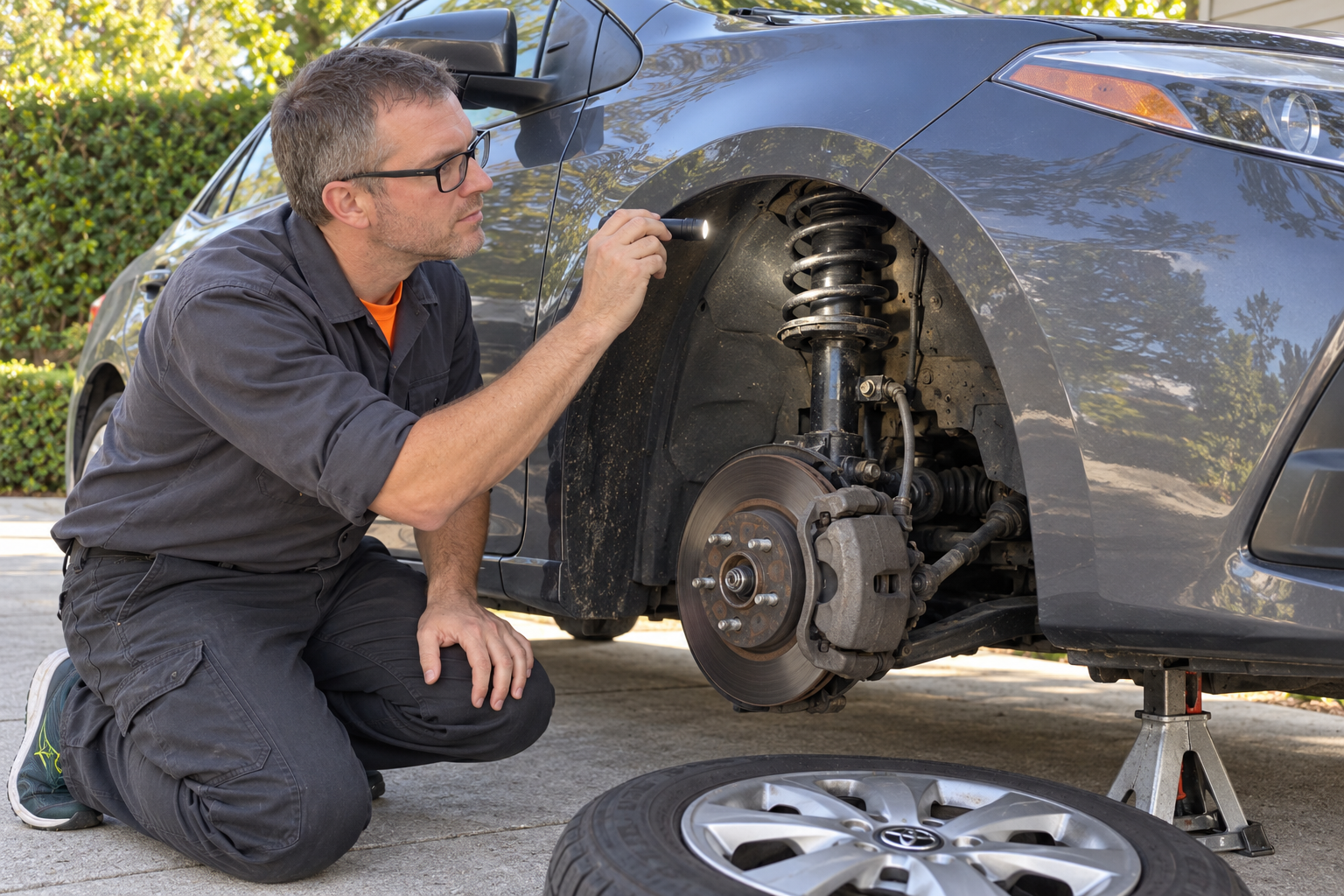
Your suspension does more than smooth out the ride. It keeps the tires pressed to the road so you can steer, brake and corner with control. Canadian roads, with potholes after every freeze-thaw cycle and road salt all winter, are hard on these parts, so knowing when you need suspension repair can save you from bigger problems later.
What are signs of bad suspension?
Most suspension problems come on gradually, so they are easy to get used to. Watch for these signs.
How the car rides and handles
- Excessive bouncing: the car keeps bouncing after a bump instead of settling quickly.
- Nose dive when braking, or the rear squatting when you accelerate.
- Body roll: the car leans heavily in corners or feels unstable in crosswinds.
- Pulling or drifting to one side, or a steering wheel that is off-centre when driving straight.
- Steering that feels loose, vague or slow to respond.
What you hear and see
- Clunking or knocking over bumps, potholes or speed bumps.
- Creaking or squeaking when turning or going over uneven ground.
- One corner of the car sitting lower than the others.
- Oily residue on the outside of a shock absorber or strut.
- Uneven tire wear, such as cupping or scalloped patches, or one edge wearing faster.
The bounce test
With the car parked, push down firmly on one corner and let go. A healthy suspension usually rebounds once and settles. If it keeps bouncing, the shocks or struts on that corner may be worn. It’s a rough check only. A proper inspection looks at every part.
Is it safe to drive with bad suspension?
It depends on what is worn, but bad suspension always reduces your margin for error. Worn shocks and struts can increase stopping distance, make the car harder to control in an emergency swerve, and reduce grip on wet or icy roads.
Some failures are urgent. Stop driving and have the car inspected where it is, or arrange a tow, if you notice:
- Steering that suddenly feels very loose, or a wheel that seems to wobble
- A loud clunk followed by the car pulling hard to one side
- A visibly broken coil spring or a wheel sitting at an odd angle
- Grinding or banging from one corner that gets worse as you drive
A failed ball joint or tie rod end can let a wheel come loose from the steering, which can cause a complete loss of control. Those parts are not worth gambling on.
What suspension components should I replace?
That depends on what an inspection finds. These are the parts that wear out most often:
- Shocks and struts: control bouncing and keep tires on the road.
- Ball joints: pivot points that connect the control arms to the steering knuckles.
- Tie rod ends: link the steering rack to the wheels.
- Sway bar links and bushings: a common source of clunking over bumps.
- Control arm bushings: rubber parts that crack and wear with age.
- Coil springs: can crack or break, especially after years of road salt corrosion.
Replace in pairs
Most manufacturers and mechanics recommend replacing shocks and struts in pairs on the same axle, front or rear, so both sides respond the same way. Replacing just one can leave the car handling unevenly.
Alignment after the repair
Replacing some parts, such as struts, tie rod ends or control arms, changes the wheel angles. A wheel alignment is usually needed afterward to keep the car driving straight and to prevent fast tire wear. Alignments are done on an alignment machine, so your mechanic will tell you whether your repair needs one and explain your options.
Is it worth fixing suspension?
In most cases, yes. Worn suspension parts affect more than comfort:
- Safety: better braking, steering and grip, especially in winter conditions.
- Tire life: worn parts cause uneven wear, so tires need replacing sooner.
- Other parts: a bad shock or worn bushing puts extra load on nearby parts, so small problems can spread.
The main exception is an older vehicle with several other major problems, such as heavy rust damage to the frame or subframe. If the suspension mounting points are badly corroded, it’s worth weighing the full repair against the vehicle’s overall condition. A mechanic can show you what they found so you can decide.
Is suspension repair expensive?
There is no single answer, because “suspension repair” can mean anything from one sway bar link to a full set of struts and control arms. The cost depends on:
- Which parts are worn and how many need replacing
- Your vehicle: parts for trucks, SUVs and some imports cost more, and some designs take longer to work on
- Rust and seized bolts: common on Canadian cars, they can add labour time
- Part quality: different grades of replacement parts are available
- Follow-up work, such as a wheel alignment
The best way to know is a proper inspection and an upfront quote before any work starts. A steering and suspension diagnosis at home finds exactly which parts are worn, so you don’t pay to replace parts that are still fine.
If you’re shopping for a used car, suspension checks are part of a good pre-purchase inspection, since worn parts are easy to miss on a short test drive.
Book a mobile mechanic
If your car is bouncing, clunking or pulling, book a suspension repair inspection at home. instaMek’s certified, dealership-trained mobile mechanics come to your home or office and bring the parts and tools. More than 50,000 customers have used instaMek, and work is backed by a 12-month / 20,000 km warranty.
Book online any time, 24/7, or call 1-888-507-3435. instaMek mechanics serve Calgary, Edmonton, Vancouver, Burnaby, Toronto and Ottawa.