Engine Repair: Warning Signs, Internal Damage and Your Options
By instaMek ·
Engine trouble rarely shows up without warning. A new noise, a warning light or a change in how the car drives is usually the first clue, and catching it early is the best way to keep an engine repair small. This guide covers whether internal damage can be fixed, the signs to watch for, and how to decide between repairing and replacing an engine.
Can internal engine damage be fixed?
Often, yes, but it depends on what failed and how far the damage has spread. “Internal” covers a wide range of problems, from a leaking gasket to a broken connecting rod.
Damage that is usually repairable
- A blown head gasket caught early, before the cylinder head warps or coolant contaminates the oil.
- Worn valve seals or piston rings that cause oil burning.
- A stretched timing chain or worn timing belt, if it is replaced before it slips or breaks.
- Sticking lifters or a noisy valvetrain, which sometimes improve with correct oil and a proper service.
Damage that is harder to fix
Severe damage, such as a seized engine, a hole in the block, a spun rod bearing or valves that hit the pistons after a timing failure, usually means the engine has to come out and be rebuilt or replaced. That is heavy work that needs more than a driveway and jacks.
Why early diagnosis matters
Many major failures start small. An overheating problem left alone can warp the cylinder head. A low-oil warning ignored for a few days can wear out bearings. A mechanic who reads the trouble codes, checks fluids and listens to the engine can often find the cause while the fix is still simple.
What are the warning signs of engine trouble?
These are the symptoms that most often point to an engine problem:
- Check engine light. A steady light means a fault has been stored. A flashing light usually means a serious misfire that can damage the catalytic converter, so ease off and have it checked right away.
- Knocking or ticking noises. A deep knock that gets faster with engine speed can mean worn bearings. An engine knocking sound inspection can pin down where the noise is coming from.
- Smoke from the exhaust. Blue smoke usually means burning oil. Thick white smoke that smells sweet can mean coolant is getting into the cylinders. Black smoke usually means the engine is running too rich.
- Overheating. A temperature gauge climbing into the red, steam from under the hood or a sweet smell all point to a cooling problem.
- Loss of power or rough running. Shaking at idle, hesitation when you accelerate or stalling can come from ignition, fuel or air problems.
- Oil or coolant leaks. Puddles under the car, or levels that keep dropping between top-ups.
- Oil pressure light. This is one of the most serious warnings on the dashboard.
When to stop driving
Pull over and shut the engine off if the oil pressure light comes on, the temperature gauge goes into the red, or you hear a loud, heavy knock. Driving on in any of those situations can turn a repairable problem into a destroyed engine. Have the car inspected where it is, or arrange a tow, rather than driving it further.
Should you repair or replace an engine?
There is no single right answer, but these questions help:
- What is wrong, exactly? A proper diagnosis comes first. Many problems that sound major turn out to be a sensor, a coil or a leaking gasket.
- How old is the car and what shape is the rest of it in? If the body is rusting badly from years of road salt, or the transmission is also failing, a major engine job may not make sense.
- What would you replace it with? Compare the cost of the repair to the cost and hassle of buying another vehicle.
- How long do you plan to keep it? A repair is easier to justify on a car you plan to drive for years.
What drives the cost of engine repair
The cost depends on the part that failed, the parts prices for your make and model, how much of the engine has to be taken apart to reach it, and how much secondary damage has been done. That’s why an upfront quote after a proper diagnosis is more useful than any general estimate.
What engine repairs can be done at home?
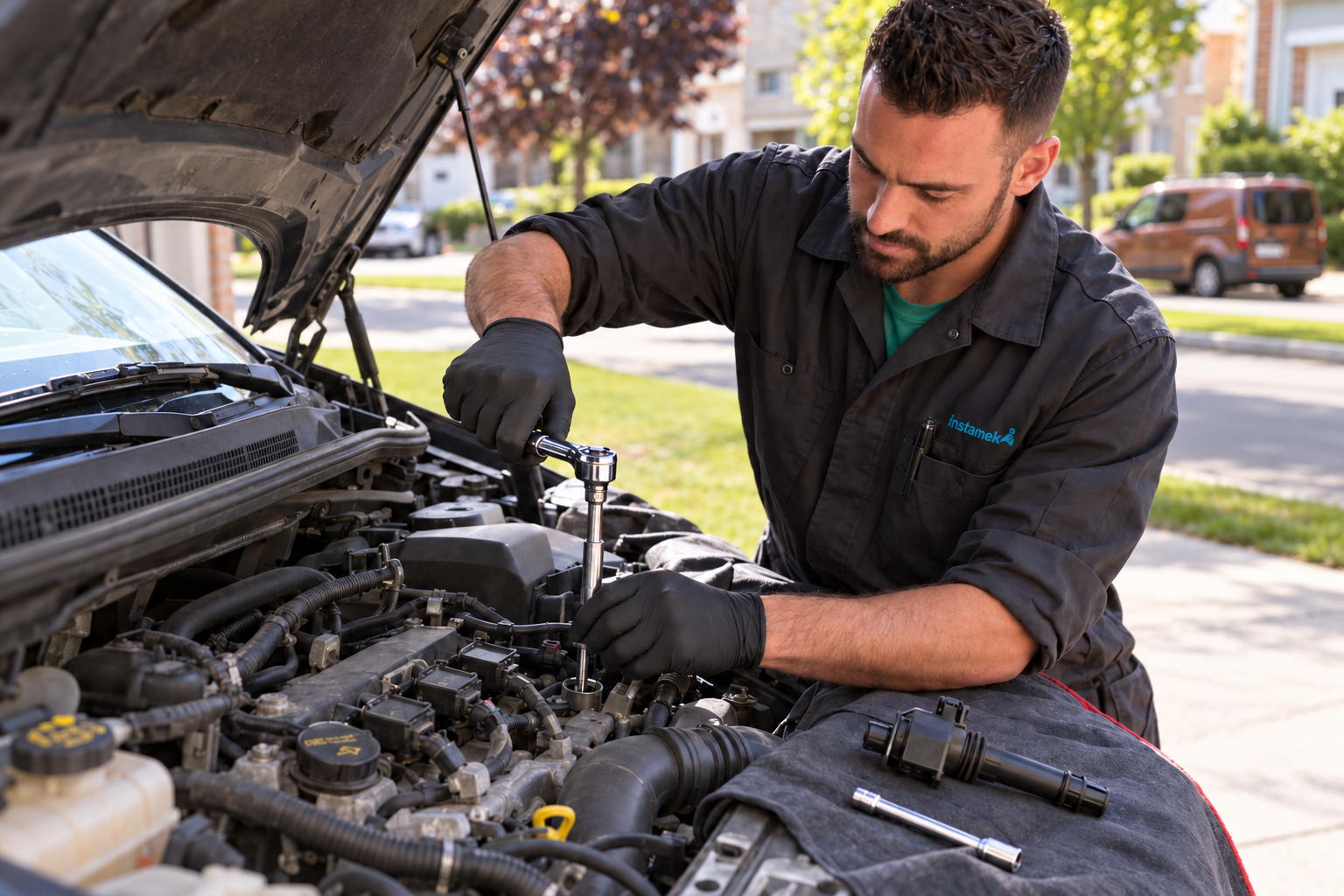
A mobile mechanic works in your driveway or parking lot with jacks and hand tools, not a shop lift. That covers a lot of common engine repair at home, depending on the vehicle, including:
- Reading trouble codes and diagnosing warning lights
- Spark plugs and ignition coils
- Many sensors, such as oxygen sensors and some camshaft or crankshaft sensors
- Drive belts, hoses and thermostats
- Valve cover gaskets and some external oil leaks
Jobs that need the engine removed, such as a full rebuild or engine replacement, can’t be done in a driveway. In those cases a mobile mechanic will diagnose the problem and explain your options clearly.
Can I rebuild an engine myself?
Some experienced home mechanics do, but it is a big project. A rebuild means removing the engine, taking it fully apart, measuring every wearing surface with precision tools, sending parts for machine work, and reassembling it to exact clearances and torque specs. It also needs space, an engine hoist and a lot of time.
For most drivers, the more practical question is whether the engine needs a rebuild at all. A diagnosis can save you from tearing down an engine that only needed a smaller repair.
Regular car maintenance, especially oil changes on schedule, is the best way to avoid internal engine damage in the first place.
Book a mobile mechanic
If your engine is making a new noise, showing a warning light or not running right, book a mobile engine repair inspection. instaMek’s certified, dealership-trained mobile mechanics come to your home or office and bring the parts and tools. More than 50,000 customers have used instaMek, and work is backed by a 12-month / 20,000 km warranty.
Book online any time, 24/7, or call 1-888-507-3435. instaMek mechanics serve Calgary, Edmonton, Vancouver, Burnaby, Toronto and Ottawa.